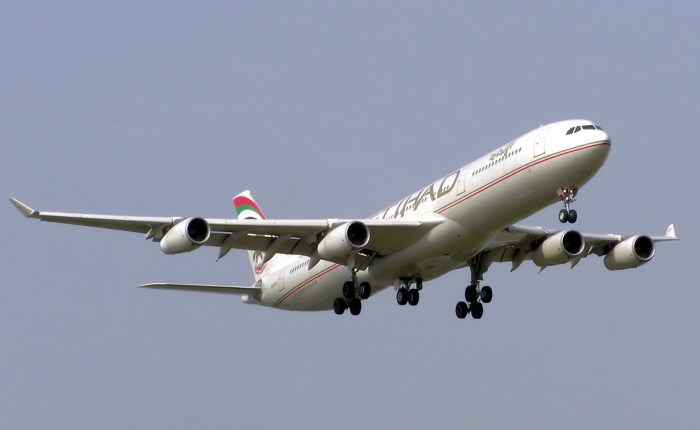
The United States and the United Kingdom both announced last month electronics bans on inbound flights from Middle Eastern countries, yet a notable difference between the orders stands out: the American ban includes airports in the United Arab Emirates and Qatar, but the UK ban does not.
The Trump administration banned carrying consumer electronics larger than a mobile phone – to include laptops and tablets – onto inbound direct flights from eight Middle Eastern and North African countries, including Jordan, Egypt, Turkey, Saudi Arabia, Morocco, Qatar, United Arab Emirates, and Kuwait. The U.S. Department of Homeland Security said the move was a response to the increased targeting of airlines and airports by terrorist groups over the past two years.
The United Kingdom issued a similar ban shortly after, but did not include the United Arab Emirates and Qatar.
While it is difficult to assess the appropriateness of measures taken in the name of national security without access to the classified information on which they may have been based, the fact that the U.K. followed suit lends credence the American concerns. Though the UK’s ban reinforces the likelihood that Washington’s decision was made for pragmatic security reasons, the difference in countries covered by the ban is not insignificant.
Why the UAE and Qatar Stand Out
The American ban uniquely applies to Doha International Airport in Qatar, Dubai International Airport in the United Arab Emirates, and Abu Dhabi International Airport in the United Arab Emirates, which are hubs for three Gulf airlines with which the United States’ three largest airlines have been in a multi-year trade dispute – Etihad (Abu Dhabi, UAE), Emirates, (Dubai, UAE), and Qatar Airways (Doha, Qatar).
The “Big Three” American airlines – United Airlines, Delta, and American Airlines – lobbied the Obama administration to review the Gulf airlines’ access rights to U.S. airports under Open Skies agreements, alleging that they benefit from unfair government subsidies that allow them to steal market share by offering better service at cheaper prices. The Gulf airlines counter that American airlines benefit from their own forms of government subsidization, including American bankruptcy protection laws (United Airlines filed for bankruptcy in 2002, Delta filed in 2005, and American Airlines filed in 2011) and public investment in airports and related infrastructure.
The inclusion of Qatar Airways, Etihad, and Emirates’ hub airports in the ban strikes at the core of these airlines’ strategic geographic advantage. Situated at the nexus of Europe and North America to the west, Africa to the south, and South Asia and East Asia to the east, these airports serve as efficient collection points facilitating global passenger flows, collecting in a central location disparate passengers traveling from one end of the world and sending them off to shared destinations on the other.
The ban dramatically inconveniences business travelers flying on Etihad, Emirates, and Qatar Airways, incentivizing them to travel on competing airlines instead. Business travelers are often expected to work while in the air, especially during long-haul flights. Now imagine a business traveler flying 14 hours without access to a laptop.
Business travelers will look elsewhere as long as this ban holds. By incentivizing business travelers to choose alternative airlines for their cross-global travel, the ban negatively impacts the Gulf airlines’ business prospects in the United States.
The ban will negatively affect the Gulf airlines’ ability to profitably conduct business in the United States. But is the ban justified on its security merits?
Security and the Gulf Airlines
One of the challenges in writing on security policy is the lack of access to national security information on which decisions may have been made. Any assessment based on publicly available information is necessarily limited for this reason – to put it simply, “you don’t know what you don’t know.”
That the UK does not include Qatar and the UAE in its ban suggests that there is at minimum a difference of opinion on the relevance of these countries to the threat these measures are meant to address. It should also be noted that the Gulf airlines and their airports take security at the last point of departure seriously, which is to be expected given their objectives of serving as major global hubs.
Of particular note, the UAE’s Abu Dhabi International Airport even has an American passport control point staffed by American Customs and Border Patrol agents inside the airport through the U.S. government’s Preclearance Program. Passengers flying to the United States from Abu Dhabi pass through American passport control and customs while in Abu Dhabi, before they even set foot in the United States. It’s worth quoting Customs and Border Patrol at length to get a full sense for what exactly this means (emphasis added):
Preclearance Overview
U.S. Customs and Border Protection (CBP) air Preclearance operations is the strategic stationing of CBP law enforcement personnel overseas to inspect travelers prior to boarding U.S.-bound flights. Through Preclearance, CBP Officers conduct the same immigration, customs, and agriculture inspections of international air travelers typically performed upon arrival in the United States before departure from foreign airports.
Today, CBP has more than 600 law enforcement officers and agriculture specialists stationed at 15 air Preclearance locations in 6 countries: Dublin and Shannon in Ireland; Aruba; Freeport and Nassau in The Bahamas; Bermuda; Abu Dhabi, United Arab Emirates; and Calgary, Toronto, Edmonton, Halifax, Montreal, Ottawa, Vancouver, and Winnipeg in Canada. CBP also staffs a Pre-inspection facility for passenger/vehicle ferry traffic to the U.S. in Victoria, Canada.
In Fiscal Year 2016, CBP personnel stationed abroad precleared 18 million travelers, representing over 15 percent of all commercial air travelers to the United States.
Preclearance Benefits
DHS firmly believes that establishing Preclearance operations in strategic locations will assist our efforts in identifying terrorists, criminals, and other national security threats prior to their boarding an aircraft bound for the United States, and is a critical step in DHS’s continued efforts to enhance national security and facilitate growing international travel and commerce.
The aviation security benefits of Preclearance are substantial because a uniformed, U.S. law enforcement officer interviews the precleared passenger before he or she boards the plane. This added security layer provides an additional opportunity to detect and stop threats as early in the process as possible.
In addition to enhancing security, Preclearance has the potential to increase capacity and create growth opportunities for airports and air carriers in the United States and abroad, while improving the passenger experience. Preclearance generates the potential for significant economic benefits for the United States and our international partners by facilitating travel through all gateways, creating an overall increase in clearance capacity, and maximizing aircraft and gate utilization. For travelers, Preclearance leads to faster connections and the ability to exit the airport immediately upon landing the United States.
Source: U.S. Customers and Border Patrol
Preclearance is explicitly designed to mitigate threats to national security, including from terrorism, before passengers depart for the United States. Passengers flying to the United States from Abu Dhabi pass through the same U.S. customs in Abu Dhabi, manned by U.S. CBP Officers, that they would receive once in the United States; they receive the same aviation security screening as they would if flying domestically in the United States:
Aviation Security Screening
Preclearance passengers, and their carry-on and checked baggage, must undergo aviation security screening prior to entering the CBP inspection area. Aviation security screening, as part of the preclearance process, must be maintained at a level comparable with Transportation Security Administration (TSA) standards. This ensures security on U.S.-bound flights and allows passengers and their baggage to transfer to connecting flights in the United States without undergoing re-screening. Some foreign airports may already provide security screening at or near this level, but a signed Memorandum of Cooperation between TSA and the local General Civil Aviation Authority is required for preclearnance operations.
Source: Preclearance Expansion: FY2016 Guide for Prospective Applicants (CBP)
If CBP officers are on premises and the provision of aviation security screening is on par with America’s, but Abu Dhabi International Airport still does not provide sufficient screening of electronic devices, then no airport anywhere can, including in the United States.
Trade Policy by Other Means?
It is impossible to know based on publicly available information why Dubai, Abu Dhabi, and Doha are included in the American electronics ban, but not the United Kingdom’s. If the justification is that these airport’s security practices are not up to par, then at the very least Abu Dhabi’s inclusion is unusual.
It is possible the decision was driven by information that flagged the UAE and Qatar as potential threat sources. According to the Department of Homeland Security’s FAQ sheet, “DHS, in close cooperation with our intelligence community partners, selected these airports based on the current threat picture.” That’s a broad statement, but it’s possible the rationale could cover other dimensions such as the geographic origins of potential threats. For example, al Qaeda in the Arabian Peninsula attempted to route bombs hidden in printer cartridges on cargo flights through Dubai in 2010. However, that does not explain why the United Kingdom viewed the threat differently and did not include these countries.
Without knowing the information on which the electronics ban decision was based, we simply cannot confidently assess whether such a far-reaching decision was commensurate with the threat and why the UAE and Qatar were covered in the U.S. ban but not the UK’s. But given American president Donald Trump’s mercantilist trade rhetoric, his pledge in February to help American airlines in their Open Skies spat with the Gulf airlines, and the fact that Abu Dhabi already meets American aviation security standards and is staffed by U.S. CBP officers, it is not unreasonable to consider whether protectionist trade motives played a significant role.
Cover Picture: Public Domain
 Filseyni
